A commercial truck is a massive investment, often worth lakhs of rupees. But ask any Indian fleet owner, and they will tell you that the real headache isn’t the truck itself—it’s everything happening around it.
Every single day, you are likely battling with fluctuating fuel consumption, unpredictable driver behavior, unauthorized route deviations, delivery delays, and the constant threat of cargo theft.
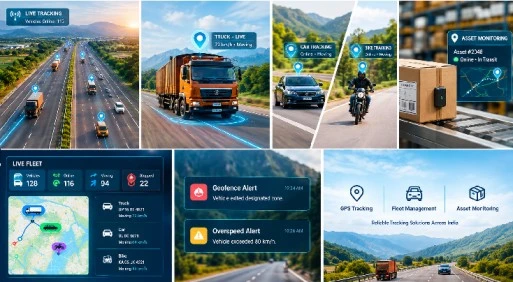
This is exactly why a modern GPS tracker for trucks is no longer just a luxury; it is the backbone of successful fleet management. A high-quality tracking system does much more than place a blinking red dot on Google Maps. It brings together robust hardware, cellular connectivity, and intelligent software to hand you absolute control over your logistics business.
However, the secret to scaling your business isn’t buying a device with the longest feature list. It’s about choosing a truck tracking system that fixes your specific everyday operational headaches.
What Exactly is a Commercial Truck GPS Tracking System?
At its core, a truck GPS tracker is an intelligent telematics device installed securely inside a commercial vehicle. It continuously captures satellite data to pin down the truck’s exact location, speed, and engine status, transmitting this data via cellular networks directly to a cloud server.
As a fleet manager, you can access this data instantly through a clean web dashboard or a mobile app while your trucks travel across states.
While basic trackers only show location and trip history, advanced systems integrate seamlessly with specialized sensors. This turns raw vehicle data into actionable business intelligence regarding fuel levels, cabin temperatures, and driver habits.
10 Features Fleet Owners Must Look for in a Truck GPS Tracker
➡️ 1. Real-Time Fleet Visibility
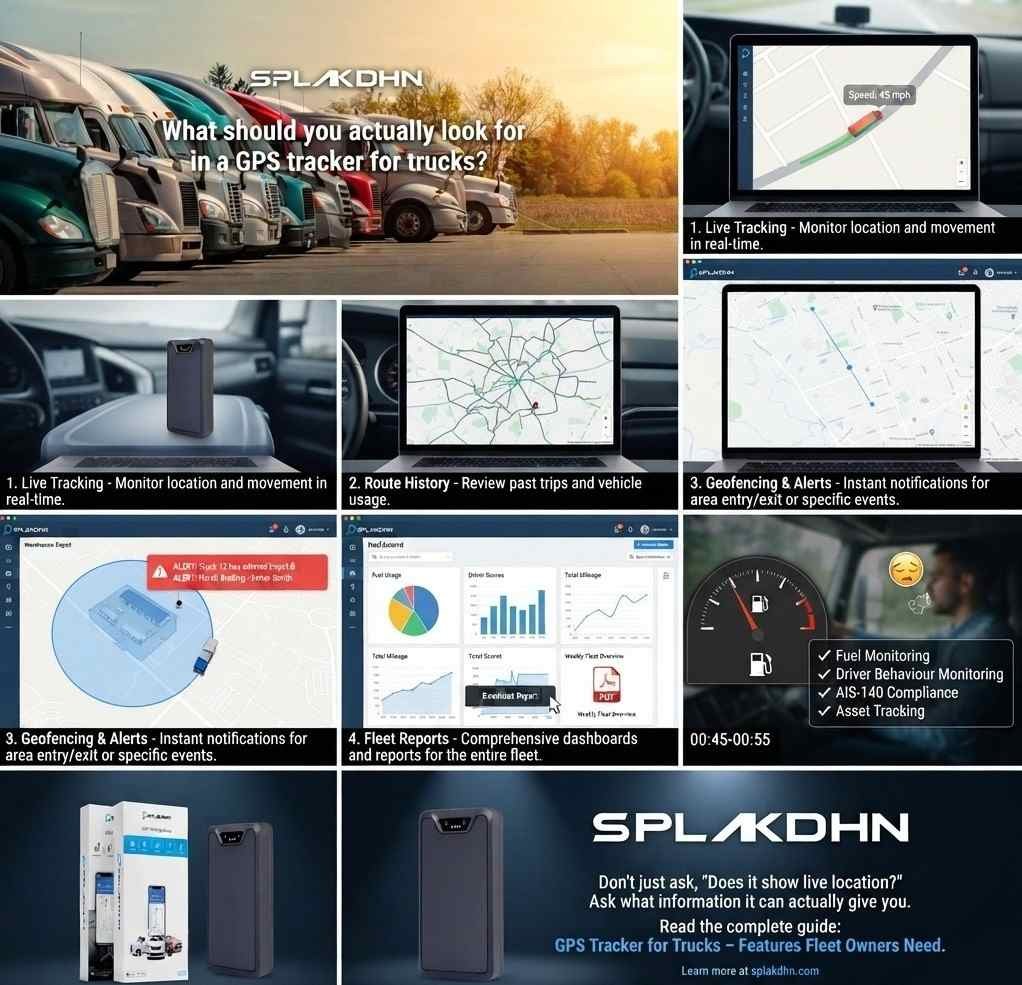
Live location tracking is the foundation of any reliable platform. Instead of wasting hours making phone calls to twenty different drivers asking “Bhaiya, kahan पहुंचे?” (Where have you reached?), a unified dashboard lets you see your entire operations in one glance:
- Which trucks are actively moving on the highway.
- Which vehicles are stationary at a warehouse.
- Any truck that has deviated from its assigned route.
➡️ 2. Route History and Interactive Trip Replay
Live tracking tells you where your truck is now, but route history tells you exactly how it got there. A professional system should retain a clear digital breadcrumb trail of past journeys. This helps you settle client disputes instantly if a customer claims a delivery was delayed or that the vehicle never entered their factory yard.
➡️ 3. Smart Geofencing and Instant Alerts
Geofencing allows you to draw virtual boundaries on a digital map around critical areas like loading docks, client warehouses, ports, or city borders. The moment your truck enters or exits these predefined zones, you receive an automated alert. This streamlines your dispatch operations and removes manual tracking errors entirely.
➡️ 4. Driver Behavior Monitoring & Safety Alerts
Your trucks represent your brand on public roads. Aggressive driving damages your vehicles, burns excessive fuel, and risks cargo safety. Advanced trackers look out for critical events like:
- Extreme overspeeding
- Harsh braking and rapid acceleration
- Long, unnecessary engine idling times
➡️ 5. Precision Fuel Monitoring & Theft Detection
Fuel is easily the highest operating cost for Indian transporters. Standard location trackers cannot read fuel metrics. To stop fuel pilferage, you need a specialized GPS Fuel Monitoring System for Trucks that integrates premium hardware, like Teltonika industrial sensors, to track live consumption, refuels, and sudden drops caused by fuel draining.
💡 Pro-Tip: Always verify if your tracking hardware natively supports advanced digital inputs (like RS232, RS485, or CAN bus) before purchasing a fuel sensor.
➡️ 6. Ignition Status & Vehicle Utilization Metrics
Is your truck working, or is it just burning fuel on the side of the highway? Tracking ignition status helps you separate true transit hours from excessive engine idling. This simple data point helps fleet owners optimize truck utilization and stop asset wastage.
➡️ 7. Anti-Tamper and Main Power-Cut Alerts
Cargo thieves and rogue drivers often try to bypass security by disconnecting tracking units. Premium commercial trackers feature internal backup batteries and instant anti-tamper alerts. If someone cuts the main vehicle battery wire, the device immediately flashes an emergency signal to your phone while continuing to track on its backup power.
➡️ 8. Emergency SOS Panic Buttons
Driver safety is paramount on long-haul Indian routes. A physical SOS panic button installed near the dashboard allows drivers to discreetly signal your central office during emergencies, accidents, or security threats, ensuring immediate assistance can be dispatched.
➡️ 9. Rugged Hardware Built for Tough Indian Roads
Indian trucks face grueling operating environments—from extreme summer heat and choking dust to relentless road vibrations and voltage spikes. Cheap, generic plastic trackers meant for personal cars will fail within weeks on a commercial commercial truck. Ensure your hardware features wide input voltage ranges and rugged, dust-protected enclosures.
➡️ 10. Intuitive Web Dashboards & Mobile Apps
The best tracking hardware is useless if the software platform is a nightmare to navigate. Transporters need an easy-to-use, multi-vehicle dashboard that lets you search quickly by vehicle registration number, create custom groups (e.g., “Delhi Fleet”, “Mining Tiickers”), and download automated weekly performance reports.
🔎 Should You Choose a Standard Tracker or an AIS-140 Device?
This is a common point of confusion for many vehicle owners.
An AIS-140 Certified GPS Tracker is an automotive-industry standard mandatory for specific public transport and commercial vehicles requiring RTO passing across Indian states. These government-approved devices feature dual SIM slots, direct government server linking, and strict emergency SOS compliance.
- Choose AIS-140 if your specific commercial vehicle category requires mandatory compliance for fitness certificates, permit renewals, or RTO passing.
- Choose Standard Fleet Trackers if you run private, unregulated long-haul operations where internal business optimization, fuel analytics, and deep telematics are your main objectives.
📊 Summary Checklist: Evaluating Your Next Truck GPS
| Feature | Strategic Importance for Fleets | Ideal Use-Case |
|---|---|---|
| Live GPS Tracking | 🌟 Essential | Everyday fleet positioning |
| Route History Replay | 🌟 Essential | Resolving customer delivery disputes |
| Smart Geofencing | 📈 Highly Useful | Automatic warehouse arrival/departure alerts |
| Fuel Sensor Support | 💡 Critical | Eliminating fuel theft & tracking drainage |
| Rugged Enclosure | 🛠️ Important | Surviving Indian road vibrations & dust |
| AIS-140 Certification | 📋 Regulated | Mandatory for official RTO passing & permits |
💡 How to Avoid Common Purchasing Mistakes
- Chasing the Lowest Price Tag: A cheap, unbranded tracker that constantly drops network connection costs you far more in hidden operational blind spots and regular maintenance than investing in industrial-grade hardware from day one.
- Ignoring Software Usability: Don’t just look at the physical device. Request a live demo of the tracking application. If you can’t navigate it easily on your smartphone, your operations team won’t use it effectively.
- Skipping Post-Sales Support: Trackers run 24/7. When a device goes offline in the middle of a vital cross-country delivery trip, you need an established tracking partner with dedicated technical support, not a fly-by-night seller.
✨ Why Choose SPLAKDHN GPS Solutions?
At SPLAKDHN GPS, we have been engineering intelligent, connected visibility for Indian transport companies since 2013. Whether you operate a single owner-driven vehicle or a sprawling multi-state logistics enterprise, we bring together premium hardware, robust software, and PAN-India installation support under one roof.
Explore our dedicated range of commercial telematics systems:
- AIS-140 Certified GPS Trackers for RTO Passing
- Advanced Fuel Monitoring Systems (Teltonika Powered)
- Cold-Chain Temperature Tracking Systems
Ready to eliminate operational blind spots and take total control of your fleet?Contact our corporate tracking experts today or explore our GPS Dealership Opportunities to scale your business across India.
Frequently Asked Questions
Can a truck GPS tracker completely stop fuel theft?
A standard GPS cannot track fuel. However, when paired with an advanced fuel sensor or CAN bus integration, the platform monitors live drops in real time, alerting you instantly via the mobile app if an unauthorized fuel drop occurs.
Does a commercial GPS tracker work smoothly across state borders?
Yes, provided there is cellular network coverage. Premium systems use open roaming SIM cards that automatically switch network providers seamlessly as your vehicle moves across different states in India.
What is the primary difference between basic tracking and fleet management?
Basic tracking simply shows location and speed on a map. Full-scale fleet management introduces analytical layers like automated reporting, route profitability metrics, preventative maintenance schedules, and driver behavior cards to help optimize total business costs.
Disclaimer: Fleet regulations, AIS-140 rules, and mandatory RTO transport guidelines can vary across different states and vehicle categories in India. Always check current local state notifications alongside official hardware certification lists when implementing regulatory compliance systems.