
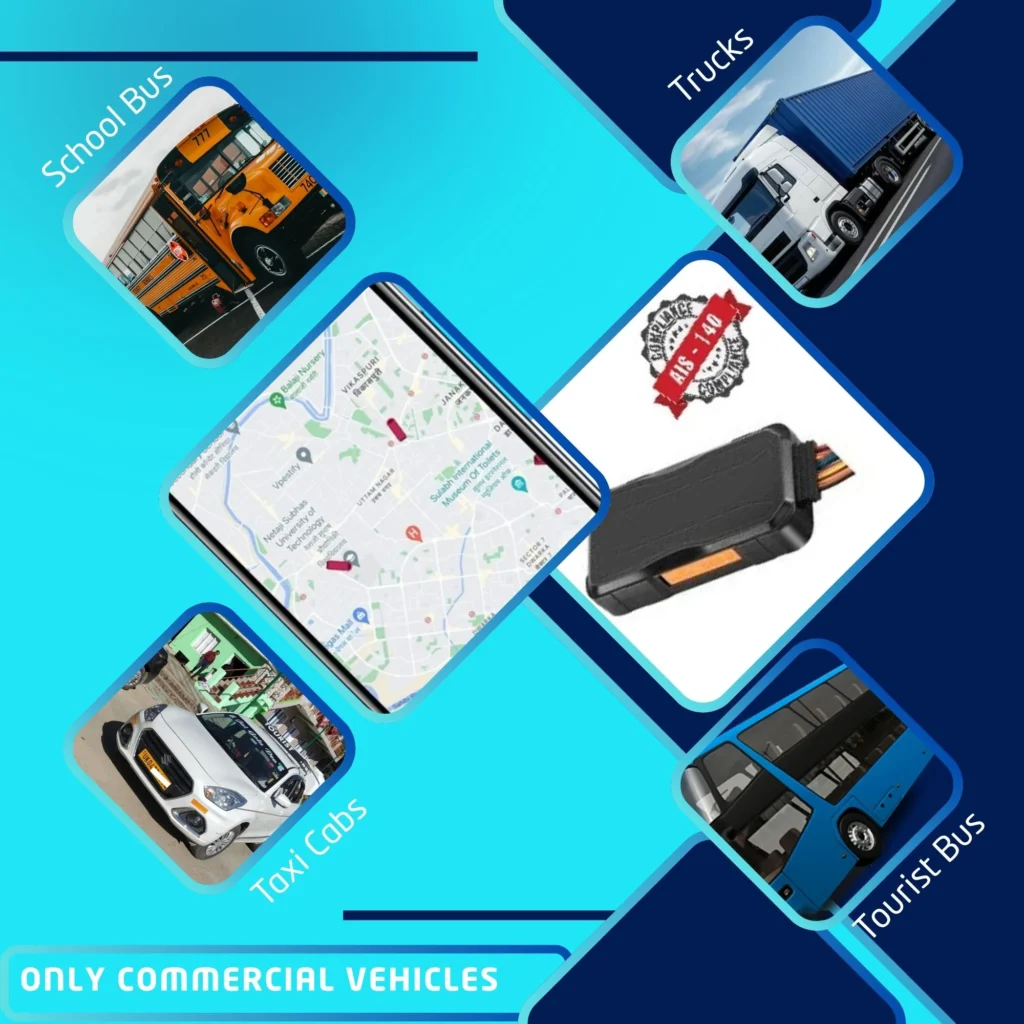
If you operate a taxi, school bus, passenger transport vehicle, or commercial fleet in India, you may have heard about AIS-140 GPS trackers. But what exactly is an AIS-140 GPS device, which vehicles require it, and how do you choose the right solution?
An AIS-140 GPS tracker is a vehicle location tracking device designed to meet India’s AIS-140 automotive industry standard for applicable vehicle tracking and emergency alert systems. Depending on the device, approved configuration, and applicable state requirements, the system can support vehicle location monitoring, emergency or panic-button alerts, route history, overspeed alerts, and communication with the relevant government monitoring infrastructure.
For commercial vehicle owners, choosing an appropriate AIS-140 GPS tracking system is important for regulatory compliance, operational visibility, and passenger safety.
In this guide, SPLAKDHN GPS explains how AIS-140 GPS tracking works, which vehicles may require it, what features to check before purchasing, and how to select a suitable solution for your commercial vehicle in India.
What Is an AIS-140 GPS Tracker?
AIS-140 stands for Automotive Industry Standard 140. It specifies requirements for vehicle location tracking devices and associated emergency alert functionality in applicable vehicle tracking systems.
Unlike an ordinary GPS tracker designed primarily for personal vehicle monitoring, an AIS-140-compliant vehicle location tracking device must meet the applicable technical and certification requirements for its intended regulatory use.
Depending on the vehicle, device, and approved system configuration, an AIS-140 GPS tracker can support:
- Vehicle location tracking.
- Location reporting through supported communication networks.
- Emergency or panic-button alerts.
- Route history and journey monitoring.
- Configured overspeed alerts.
- Geographical boundary and route-related alerts where supported.
- Device health monitoring and reporting.
- Integration with the applicable state vehicle tracking and monitoring infrastructure.
The exact features and compliance capabilities depend on the approved device, its configuration, and the relevant state implementation.
An important distinction: A GPS tracker advertised for commercial vehicles is not automatically an AIS-140-compliant device. If your vehicle requires AIS-140 compliance, verify the device’s valid approval, applicable certification, and acceptance by the relevant transport authority or state system.
Which Vehicles May Require an AIS-140 GPS Tracker in India?
One of the most common questions commercial vehicle owners ask is whether AIS-140 GPS installation is mandatory for their vehicle.
The answer depends on the vehicle category, its permitted use, applicable central rules, and state-specific implementation.
India’s vehicle location tracking framework includes requirements for specified public service vehicles. Separate requirements also apply to certain categories of vehicles transporting dangerous or hazardous goods.
For example, the Ministry of Road Transport and Highways has issued requirements concerning AIS-140 vehicle tracking devices for specified N2 and N3 category vehicles carrying dangerous or hazardous goods, with applicability dates differentiated by vehicle model status.
You can review the official government announcement on hazardous-goods vehicle tracking through the Press Information Bureau.
The following table provides a general overview of vehicle categories for which AIS-140 requirements may be relevant.
| Commercial vehicle category | What owners should check |
|---|---|
| Passenger taxis and cabs | Permit category, registration details, and applicable state requirements |
| Tourist taxis and commercial passenger cars | Vehicle classification and applicable transport authority requirements |
| School buses | Applicable school transport rules, vehicle category, and state requirements |
| Passenger buses | Applicable public service vehicle requirements and approved device specifications |
| Commercial passenger transport fleets | Vehicle permits, registration status, and state tracking system requirements |
| Trucks carrying dangerous or hazardous goods | Applicable vehicle category and specific central government requirements |
| Other commercial vehicles | Whether their category, permitted use, or applicable regulations require an AIS-140 device |
This table is a starting point, not a definitive legal determination for every vehicle.
Before purchasing a device, confirm the current requirements with your state transport department, Regional Transport Office (RTO), or an authorised provider familiar with the applicable state system.
Is AIS-140 GPS Mandatory for Commercial Vehicles?
AIS-140 GPS requirements are not identical for every commercial vehicle in India.
Rule 125H of the Central Motor Vehicles Rules established requirements concerning vehicle location tracking devices and emergency buttons for specified public service vehicles, subject to stated exceptions and applicable provisions.
Requirements have also been introduced for certain vehicles carrying dangerous or hazardous goods.
However, the applicability of these requirements depends on factors such as vehicle category, use, registration or manufacturing circumstances where relevant, applicable amendments, and state-level implementation.
For this reason, commercial vehicle owners should not assume that every vehicle with a commercial registration requires the same AIS-140 device.
Before installation, confirm:
- Whether your vehicle falls within a category covered by the applicable requirements.
- Whether a particular approved device or model is required.
- Whether the device must be registered or activated through the relevant state system.
- Whether the panic button and other required functions must be tested.
- Whether the relevant authority requires particular documents or a fitment certificate.
For further information, refer to the Ministry of Road Transport and Highways and your relevant state transport department.
Practical advice: If your taxi, bus, or other commercial vehicle is approaching fitness renewal or permit-related processing, verify the requirements early. This can help you avoid delays caused by an unsuitable device, incomplete activation, or missing documentation.
How Does an AIS-140 GPS Tracking System Work?
An AIS-140 GPS tracking system combines vehicle positioning, communication, and monitoring functions.
Although individual systems vary, the general process involves the following components.
1. Vehicle location tracking device
The vehicle is fitted with a compatible vehicle location tracking device. It uses supported positioning technology to determine the vehicle’s location and collect relevant information.
The device’s approved specifications determine which functions it supports.
2. GPS and positioning technology
The device receives positioning signals and calculates its geographical location.
Positioning performance depends on satellite reception, installation, environmental conditions, and the device’s capabilities.
3. Mobile communication
The device transmits location and other supported data using its configured communication connection.
Depending on the system, this information can be sent to the relevant monitoring infrastructure and authorised tracking platform.
If connectivity is interrupted, data transmission or reporting may be delayed.
4. Emergency or panic-button functionality
Where required, an emergency button can allow a passenger or crew member to trigger an alert.
The device and associated system must support the applicable emergency alert requirements. Correct installation, configuration, connectivity, and testing are important to ensure that the alert reaches the intended monitoring system.
5. Monitoring infrastructure
The relevant state vehicle tracking system receives and processes information from compatible, registered or activated devices according to its implementation.
Depending on the system, this may support vehicle monitoring, emergency alerts, device health checks, and other authorised functions.
For example, the Vehicle Location Tracking and Emergency Alert System portal describes these capabilities in the context of Bihar’s AIS-140 system.
The exact registration, activation, and monitoring process may differ between states.
Key Features of an AIS-140 GPS Tracker
When comparing AIS-140 GPS trackers for commercial vehicles, it is important to distinguish between features required for the relevant compliance use case and additional commercial tracking features.
Here are the main capabilities to understand.
1. Real-time vehicle location tracking
An AIS-140 vehicle location tracking system can report a vehicle’s position through its supported communication infrastructure.
This can help authorised users monitor vehicle movements and identify the last reported location.
Actual update frequency depends on the device, configuration, network conditions, and applicable system requirements. Real-time tracking does not mean that every update is delivered without delay under all circumstances.
2. Emergency or panic-button alerts
Emergency alert functionality is an important element of applicable AIS-140 systems.
When a configured emergency button is pressed, the system is designed to transmit an alert according to its supported protocol and configuration.
For operators, it is essential to ensure that the required button is installed correctly and that the device and monitoring system have been tested.
3. Route history
Supported tracking platforms can record and display historical location information.
Depending on the platform and its retention settings, this can help authorised users review earlier journeys and understand vehicle movements.
The available history period varies by system. Confirm the required retention and reporting capabilities before selecting a solution.
4. Overspeed alerts
Some vehicle tracking systems support configured overspeed notifications.
These alerts can help operators identify instances where a vehicle exceeds a specified speed threshold.
The availability and configuration of this feature depend on the approved device and tracking platform.
5. Geofencing and route-related alerts
Depending on the system, users may be able to configure geographical boundaries or route-related alerts.
These features can be useful for monitoring whether a vehicle enters or leaves a designated area or deviates from a defined operating zone.
Not every additional fleet management feature is necessarily part of the mandatory AIS-140 functionality. Check the individual product specifications.
6. Device health monitoring
Device health monitoring helps identify whether the tracking device is functioning and communicating as expected.
Depending on the system, this can include reporting device status, communication health, or other supported diagnostic information.
For commercial operators, regular device checks can help identify problems before they interfere with routine operations or compliance-related processes.
AIS-140 GPS Tracker vs Ordinary GPS Tracker: What Is the Difference?
This is one of the most important distinctions to understand before purchasing a commercial GPS tracking device.
An ordinary GPS tracker may be suitable for vehicle security, personal vehicle monitoring, or general fleet management. An AIS-140 GPS device is intended to meet the applicable technical and certification requirements associated with AIS-140 use.
| Feature | Ordinary GPS tracker | AIS-140 GPS tracker |
|---|---|---|
| Main purpose | General vehicle or asset tracking | Vehicle tracking for applicable AIS-140 requirements |
| Vehicle location monitoring | Depends on the device | Supported according to approved specifications and configuration |
| Emergency or panic-button functionality | May or may not be available | Required functionality applies to relevant AIS-140 systems |
| AIS-140 approval | Not necessarily required or available | Applicable valid approval and certification must be verified |
| Government system integration | Not necessarily supported | Must meet the relevant system’s compatibility and integration requirements where applicable |
| Device activation | Depends on the provider | May require the applicable registration and activation process |
| Suitability for regulated vehicles | Depends on the applicable rules | Appropriate when the approved device and system meet the vehicle’s requirements |
Important: Installing a device labelled “AIS-140” does not, by itself, prove that a vehicle has completed the required compliance process.
Verify the actual model, approval validity, relevant state acceptance, registration, activation, and other applicable requirements.
What Is the AIS-140 GPS Tracker Installation and Activation Process?
The installation process can vary depending on the vehicle, device, manufacturer, and state monitoring system.
A typical process may include the following steps.
Step 1: Confirm the vehicle’s requirements
Identify the vehicle category, registration details, permit status, and applicable regulatory requirements.
Confirm which device and certification are accepted for your intended use.
Step 2: Select an appropriate approved device
Verify the device model and the validity of its relevant approval.
The Automotive Research Association of India (ARAI) publishes information about approved components and vehicle tracking systems. You can consult the ARAI approved components and vehicle tracking systems resources when checking relevant approval information.
Approval and acceptance should be verified against the applicable requirements at the time of purchase.
Step 3: Arrange installation
The device must be installed according to the manufacturer’s instructions and applicable requirements.
Installation may involve mounting the tracking device, connecting the required power supply and communication components, and fitting the applicable emergency button.
Use an appropriately qualified or authorised installer where required.
Step 4: Complete registration or activation where applicable
Depending on the state system, vehicle and device details may need to be registered and activated.
This may involve vehicle identification information, device details, telecom information, and other required records.
Step 5: Test the device and emergency functionality
The required functions should be checked according to the applicable procedure.
Where required, the emergency button, device communication, and connection to the relevant monitoring system must be tested.
Step 6: Confirm the required documentation
If the relevant process requires an activation record, fitment certificate, or other documentation, confirm that it has been issued and that the information is correct.
The Ministry of Road Transport and Highways’ vehicle location tracking registration and activation procedure provides further information about the VAHAN-related activation process.
Because the procedure can vary by state and system, vehicle owners should confirm the exact steps with the relevant authority or authorised provider.
How Much Does an AIS-140 GPS Tracker Cost in India?
The cost of an AIS-140 GPS tracker depends on more than the hardware price.
Factors that can affect the total cost include:
- Device model and approved specifications.
- Installation charges.
- Emergency button and associated components.
- SIM connectivity and data services.
- Tracking software or subscription charges, where applicable.
- Registration or activation services.
- Required testing and documentation.
- Warranty and after-sales support.
Some suppliers quote only the device price, while others offer a package that includes installation or additional services.
For this reason, compare the total cost of getting the vehicle equipped and operational rather than comparing hardware prices alone.
Before purchasing, ask the provider:
- Is the quoted device the exact model approved for my intended use?
- Is installation included?
- Are registration and activation services included, if required?
- Are SIM and software charges recurring?
- Is assistance available if activation or testing fails?
- What warranty and technical support are provided?
If you manage multiple vehicles, request a fleet quotation that clearly separates one-time and recurring charges.
For current product details and pricing, visit the SPLAKDHN AIS-140 GPS Tracker page.
How to Choose the Right AIS-140 GPS Tracker for Your Commercial Fleet
Selecting an appropriate AIS-140 tracking solution requires checking both regulatory suitability and practical operating needs.
Here is a checklist to help you make a better decision.
Verify approval: Check the exact model and the validity of its relevant certification.
Confirm state compatibility: Establish whether the device can be registered, activated, and used with the applicable state system for your vehicle.
Check emergency functionality: Confirm the required emergency button, configuration, and testing arrangements.
Understand the reporting system: Ask how location data is transmitted and what happens during communication interruptions.
Review installation arrangements: Establish who will install the device and what documentation will be provided.
Compare total ownership costs: Check device price, installation, connectivity, software, and renewal charges.
Check support availability: Find out who will assist with technical issues, activation, and warranty claims.
Keep compliance records: Retain relevant device details, certificates, activation records, and other documentation.
For a fleet operator, these checks are especially important because a problem affecting multiple vehicles can cause operational disruption and additional costs.
AIS-140 GPS Solutions for Taxis, Buses, Trucks and Fleet Operators
Different commercial vehicle operators have different requirements.
Taxi and cab operators
Taxi operators may need an AIS-140 solution depending on the vehicle category, permit, and applicable requirements.
Before purchasing, confirm the required device, emergency functionality, state
Best Local VTLD RTO Certified GPS Installation in Kumaon, Uttarakhand