
Every small business owner running vehicles knows that sinking feeling in the pit of their stomach:
- “Why is the delivery driver taking 2 hours for a 20-minute drop?”
- “Is that vehicle actually stuck in traffic, or idling with the AC running on company fuel?”
- “Did my service team reach the client site on time, or am I about to get an angry call?”
When your vans, trucks, or bikes leave your yard, you lose visibility. You’re essentially handing someone the keys to your expensive asset, a company fuel card, your brand reputation, and hoping for the best.
Tracking your vehicles isn’t about micromanagement or snooping on employees—it’s about protecting your operating margins. A reliable GPS tracking system turns guesswork into hard, verifiable data so you can cut wasted kilometres, prevent vehicle misuse, and deliver a better customer experience.
Here is your complete guide to choosing, implementing, and getting maximum ROI from a business GPS tracking system.
What Does a Modern Business GPS Tracker Actually Do?
Gone are the days when a GPS tracker was merely a blinking blue dot on an outdated desktop map. Modern GPS fleet systems combine satellite positioning, 4G cellular IoT chips, and smart mobile apps to give you an actionable, real-time command centre right on your smartphone.
The Core Features That Drive Business Value:
- True Real-Time Tracking: Sub-10-second updates showing vehicle location, running speed, and ignition status (Engine ON/OFF).
- Trip History & Playback: Replay entire journeys second-by-second to verify exact routes, detours, and halt times.
- Smart Geofencing: Draw virtual boundaries around warehouses, job sites, or forbidden areas to get instant alerts whenever a vehicle enters or exits.
- Fuel & Idling Analytics: Detect excessive idling (AC running while parked) and identify abnormal fuel drops that suggest siphon theft.
- Engine Immobilisation (Anti-Theft): Cut off the vehicle’s ignition remotely via your app if unauthorised movement or theft is detected.
- Driver Behaviour Alerts: Monitor harsh braking, aggressive cornering, overspeeding, and overnight use.
4 Expensive Problems GPS Tracking Solves Overnight
1. The “Vanishing Fuel” Dilemma
Fuel is consistently the largest, most unpredictable operational expense. Drivers taking roundabout routes, making personal detours on company time, or idling with the engine running can easily drain 15% to 25% of your fuel budget every month. Tracking gives you actual mileage verification against fuel receipts.
2. “Where Is My Order?” Customer Churn
When a customer calls asking where their delivery or technician is, having to call the driver (who often doesn’t pick up while driving) makes your business look disorganised. With a live dashboard, your support team can see the vehicle’s exact ETA instantly—or even share an encrypted, temporary live-tracking link with the client.
3. Moonlighting and Unauthorised Vehicle Use
Do your work vehicles stay parked after hours, or are they being used for off-the-books weekend deliveries and personal errands? Automated after-hours movement alerts stop unauthorized vehicle wear and tear in its tracks.
4. False Claims and Billing Disputes
Whether a client claims your technician never arrived or a customer argues a delivery was late, your GPS time-stamped log serves as indisputable proof of service.
💡 Quick Fleet Health Check
Are your commercial vehicles burning more fuel than budgeted?
[Schedule a 10-Minute Splakdhn Live Demo] and see how our plug-and-play GPS systems deliver positive ROI in under 30 days.
Which Type of GPS Tracker Does Your Business Need?
Choosing the wrong tracker leads to battery drainage, unreliable signals, or costly installation headaches. Here is how the three main hardware categories compare:
| Tracker Type | Best Suited For | Key Advantages | Potential Limitations |
| Hardwired Trackers | Trucks, delivery vans, commercial fleets, construction machinery | Permanent, tamper-proof, hidden installation; supports remote engine cutoff | Requires professional wiring/technician setup |
| OBD-II Plug-and-Play | Company cars, light vans, shared sales fleet | Installed in seconds; easily moved between vehicles; no wire cutting | Visible to the driver; can be unplugged if not secured |
| Asset / Magnetic Battery Trackers | DG sets, trailers, rented equipment, cargo containers | 100% wireless; massive battery life (months/years); water-resistant | No engine telemetry or remote cutoff capability |
Common Mistakes Small Businesses Make When Buying GPS
Avoid these costly traps when evaluating tracking vendors:
- Buying cheap consumer trackers from open marketplaces: Consumer trackers often use cheap 2G chips prone to signal dropouts, lag behind by minutes, and rely on buggy software hosted on unreliable overseas servers.
- Ignoring customer support: If a device stops updating during an urgent delivery run, an unstaffed chatbot won’t help. You need responsive local support that can troubleshoot SIM and hardware issues.
- Overpaying for features you will never touch: Enterprise fleet software comes with heavy pricing for complex transport-manifest features most small-to-medium businesses never use. Choose a platform that focuses on speed, clarity, and ease of use.
- Overlooking regulatory compliance (AIS-140): If your commercial vehicles operate in regulated transport sectors, ensure your hardware carries proper AIS-140 government certifications with emergency panic buttons.
How to Roll Out GPS Tracking Without Alienating Your Drivers
One common hurdle for small businesses is driver pushback. If drivers feel they are being “spied on,” morale drops.
How to frame it successfully:
- Frame it around safety: Emphasise rapid emergency assistance, accident alerts, and theft recovery.
- Protect drivers from blame: Explain that GPS logs protect good drivers against unfair customer complaints about delays caused by heavy traffic or bad weather.
- Introduce driver incentives: Use performance reports (clean driving, speed adherence, low idling) to award monthly bonuses to top-performing drivers.
Transform Your Fleet with Splakdhn
Managing a business fleet doesn’t require complex spreadsheets, endless phone calls, or costly enterprise software contracts.
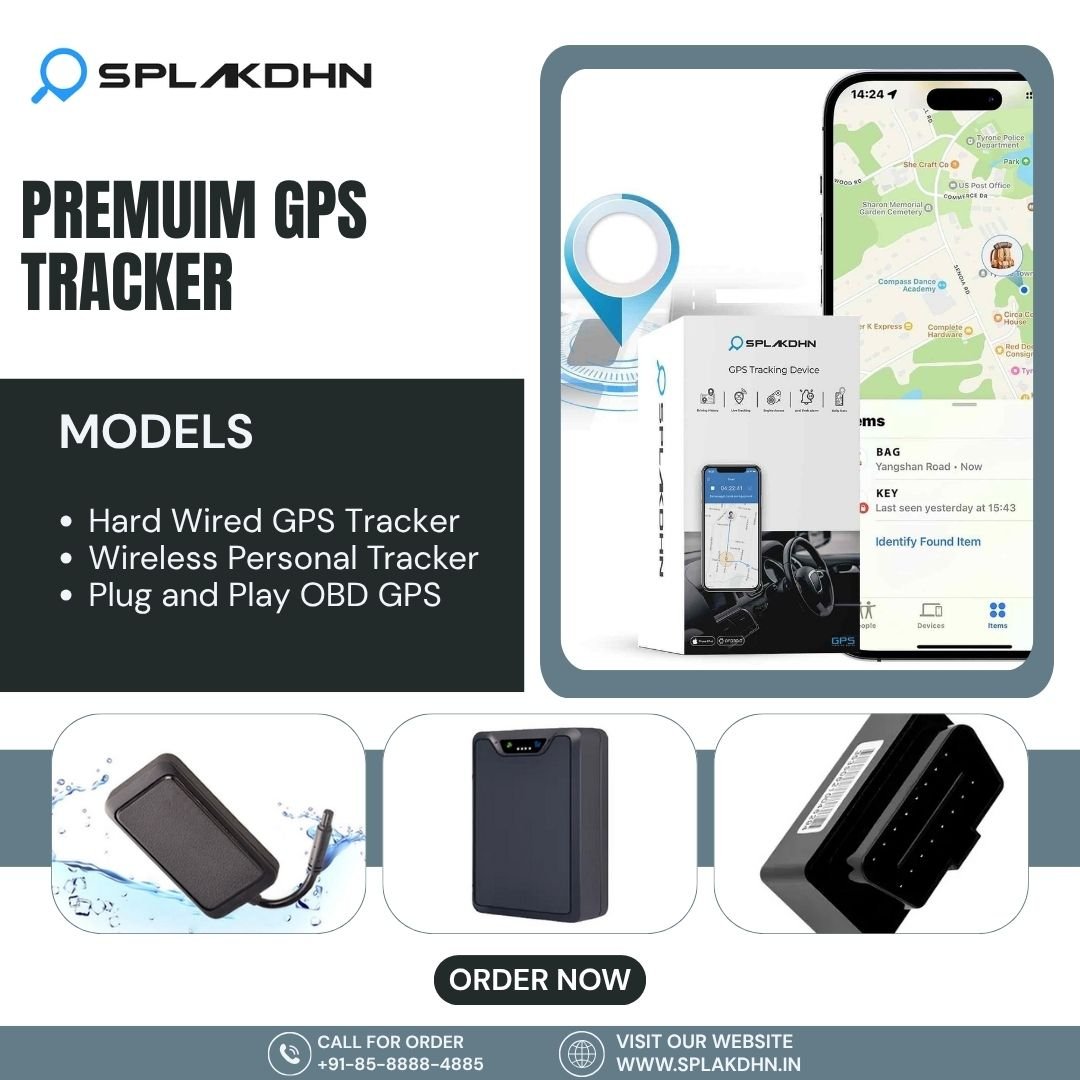
At splakdhn.in, we provide small and growing businesses with robust, high-precision GPS tracking devices paired with an intuitive web & mobile application. Whether you run a single pickup truck, a fleet of delivery two-wheelers, or heavy commercial machinery, our systems are built to keep your operations running on time and on budget.
What You Get With Splakdhn:
- Industrial-grade, high-sensitivity GPS hardware (2G & 4G-ready)
- Intuitive Android and iOS mobile apps + desktop dashboard
- Instant overspeed, geofence, and ignition alerts via Push/SMS
- Engine immobilisation with one tap for instant theft prevention
- Dedicated technical setup and customer onboarding support
Ready to eliminate guesswork and slash your operating costs?
Don’t let fuel waste and poor visibility eat into your hard-earned profits. Reach out today for an honest assessment of your vehicle tracking needs.
👉 Request a Free Splakdhn Fleet Consultation & Quote
Running a small business often means managing several things at once. You may have customers waiting for deliveries, employees travelling between job sites, vehicles moving across different locations, and operating expenses that seem to increase every month. When you cannot see where your vehicles are or how efficiently they are being used, even simple decisions can become difficult.
This is where GPS tracking can make a real difference.
GPS tracking for small businesses helps owners monitor vehicle locations, review journeys, improve fleet visibility, reduce unnecessary travel, and make more informed operational decisions. It is no longer a technology reserved for large logistics companies with hundreds of trucks. Today, small businesses can use GPS tracking systems to manage a single delivery van, a handful of service vehicles, a taxi fleet, or a growing network of field employees.
The important question is not simply whether your business needs GPS tracking. It is which type of GPS tracker will solve your actual problems without adding unnecessary costs or complexity.
In this complete guide, we will explain how GPS tracking works, which businesses benefit from it, what features to look for, how to compare different tracking devices, and how to choose an affordable GPS tracking solution for your business.
What Is GPS Tracking for Small Businesses?
GPS tracking for small businesses is a system that uses satellite positioning, a tracking device, a communication network, and software to help business owners monitor vehicles, assets, or other mobile equipment.
A GPS tracker determines its location using signals from navigation satellites. Depending on the device and system, that location is then transmitted through a cellular network or another supported communication method to a tracking platform. The business owner can view the available information through a mobile application or web dashboard.
For example, a small distribution company operating five delivery vehicles can use GPS tracking to see where its vehicles are, check recent journeys, and review whether vehicles are following expected routes.
A plumbing company can monitor its service vans while technicians travel between customer appointments. A small transport operator can review vehicle movement and maintain better visibility over daily operations.
A GPS tracking system may provide features such as:
- Live vehicle location on a digital map
- Vehicle movement and trip history
- Route playback for previous journeys
- Geofencing and location-based alerts
- Speed alerts, where supported
- Distance and journey summaries
- Driver or vehicle activity information, depending on the system
- Reports for operational planning
- Ignition status and remote immobilisation on compatible devices
Not every GPS tracker includes every feature. The actual capabilities depend on the hardware, software platform, vehicle compatibility, network coverage, and subscription package.
The best GPS tracking system for a small business is one that provides the information needed to make everyday operations easier, rather than one with the longest feature list.
Why Small Businesses Are Investing in GPS Tracking
For a small business, a vehicle is more than a means of transport. It represents fuel expenses, maintenance costs, employee time, customer commitments, and sometimes a significant investment of capital.
When vehicles are used inefficiently, the costs can accumulate quietly.
A delivery driver may take a longer route because of an unfamiliar area. A service van may travel to a location that could have been handled by a closer vehicle. A business owner may receive repeated calls asking where a delivery is. An asset may be moved without the owner knowing its current location.
Individually, these problems may appear minor. Over weeks and months, however, they can affect productivity and customer satisfaction.
GPS tracking provides better visibility into vehicle movements and helps owners identify patterns that deserve attention.
1. Better visibility of business vehicles
One of the most immediate benefits of GPS tracking is being able to check vehicle locations without repeatedly calling drivers.
A business owner can open the tracking application and view the latest reported position of a vehicle. This can be particularly useful when managing delivery vans, field-service vehicles, company cars, taxis, or small commercial fleets.
Live tracking does not eliminate every delay or communication problem, but it gives managers another source of information when making decisions.
2. More organised daily operations
When a business knows where its vehicles are and understands their typical travel patterns, it can plan work more efficiently.
For example, a maintenance company receiving an urgent service request may be able to identify a suitably located vehicle rather than assigning the job automatically to the next available technician.
The benefit comes from using location information alongside employee availability, job requirements, traffic conditions, and customer schedules.
3. Better control over operating expenses
GPS tracking can help businesses identify avoidable mileage, unnecessary trips, excessive idling where the system supports it, and repeated route inefficiencies.
It does not automatically reduce fuel bills. Savings depend on how the business uses the information and whether it changes its operating practices.
However, having reliable journey records can make it easier to understand where time and money are being spent.
4. Improved accountability
When vehicles are shared between employees or assigned to different jobs, tracking records can help clarify when and where a vehicle travelled.
This information may support internal reviews, customer queries, and operational planning. It should be used fairly, with appropriate employee communication and access controls.
5. Greater confidence as the business grows
A business operating two vehicles may be able to manage them through direct communication. When the fleet grows to ten, twenty, or fifty vehicles, the same approach becomes increasingly difficult.
GPS tracking creates a more consistent way to monitor vehicles and review their activity as the business expands.
Which Small Businesses Need a GPS Tracking System?
GPS tracking is useful for businesses whose operations depend on vehicles, mobile workers, or equipment that moves between locations. The ideal solution varies according to the nature of the work.
Delivery and courier businesses
Delivery businesses need visibility over vehicles travelling between warehouses, shops, offices, and customer addresses.
A GPS tracker for a delivery van can help owners review routes, check the latest vehicle position, and investigate delays. Historical tracking records can also help when customers ask about a delivery or a vehicle’s arrival time.
For smaller courier companies, the ability to monitor several vehicles from one dashboard can be especially useful.
Taxi operators and car rental businesses
Taxi owners, travel operators, and rental businesses need to maintain visibility over vehicles that may be driven by different people throughout the day.
GPS tracking can help owners check vehicle locations, review trips, and receive movement or geofence alerts when supported.
For rental vehicles, tracking can be useful for asset protection and fleet administration. Businesses should inform drivers and customers where legally required and configure tracking in accordance with applicable privacy rules.
Small transport and logistics companies
Transport businesses often work with tight schedules, customer delivery commitments, and fluctuating operating expenses.
A GPS tracking system for a small transport fleet can provide journey history, location information, route visibility, and fleet-level reports. Compatible devices may also offer additional vehicle information or alerts.
These records can support dispatch planning and help operators understand how their vehicles are being used.
Field-service and maintenance companies
Electricians, plumbers, appliance repair technicians, cleaning services, and maintenance contractors frequently travel between customer locations.
GPS tracking can help managers understand where service vehicles are and coordinate urgent assignments more effectively.
For a company with several service vans, even basic live tracking and journey history may be sufficient to improve coordination.
Construction and equipment rental businesses
Construction companies may own generators, compressors, machinery, trailers, and other valuable equipment that is transported between work sites.
A conventional vehicle tracker may not be the right choice for every asset. Battery-powered wireless GPS trackers can be more suitable for equipment that does not have a convenient vehicle power connection.
Before choosing an asset tracker, check its battery life under realistic reporting conditions, mounting options, network coverage, and suitability for outdoor environments.
Small businesses with sales representatives
Businesses with field sales teams may use location information to coordinate visits, plan territories, or review travel patterns.
However, vehicle tracking and employee monitoring are not the same thing. Businesses should define a clear business purpose, communicate their policies, and avoid collecting more personal information than necessary.
How Does a GPS Tracking System Work?
Understanding the basic technology makes it easier to choose the right device.
A typical vehicle GPS tracking system has four main parts.
1. GPS tracking device
The tracker receives positioning signals from satellites and calculates its location.
Different devices are designed for different installation requirements. Some connect directly to a vehicle’s OBD port, some are wired into the vehicle’s electrical system, and others operate using an internal rechargeable battery.
2. Mobile network or communication connection
Many vehicle trackers use a SIM card and a cellular network to send location data to the tracking platform.
The tracker may need an active SIM plan, data connectivity, and a compatible network. Coverage, roaming arrangements, and network technology can affect performance.
A GPS tracker does not automatically provide unlimited tracking simply because it contains a GPS receiver. The communication method and service plan matter too.
3. Tracking software
The tracking platform receives information from the device and displays it in a usable format.
This may include the current or latest reported location, journey history, movement alerts, geofence events, and reports.
The quality of the software is important because a technically capable tracker is less useful if its application is difficult to operate.
4. Mobile app or web dashboard
Business owners can access tracking information through a smartphone, tablet, or computer, depending on the service.
A mobile app is useful when an owner is away from the office. A web dashboard may be more convenient for reviewing several vehicles, generating reports, or managing a fleet.
Before purchasing a device, check that the tracker is compatible with the intended platform and that the required service remains available for the expected operating period.

Types of GPS Trackers for Small Businesses
Choosing the right tracker starts with understanding how it will be powered, installed, and used.
An OBD GPS tracker plugs into a compatible vehicle’s diagnostic port. Many passenger cars have an OBD-II port, but compatibility should always be checked for the specific vehicle.
The main attraction is straightforward installation. In many supported vehicles, the device can be connected without the conventional hardwiring process.
An OBD GPS tracker for a small business may be suitable for:
- Small company car fleets
- Sales and service vehicles
- Certain taxi and rental cars
- Businesses that need a portable tracking solution for compatible vehicles
Before buying, verify port compatibility, physical fit, reporting features, and whether the device supports the vehicle’s electrical and operating requirements.
A wired GPS tracker is connected to the vehicle’s electrical system, usually through a professional installation.
This option is commonly used for motorcycles, commercial vehicles, taxis, vans, and other vehicles where a permanent installation is preferred.
Depending on the model, a wired tracker may support ignition detection, movement alerts, geofencing, journey reports, and other vehicle-related features.
Some models also support remote immobilisation. This feature requires compatible hardware and correct installation; it is not available on every wired tracker and should be used only when it is safe and legally appropriate.
A wireless GPS tracker typically uses an internal battery and does not require a permanent vehicle power connection.
It can be useful for movable equipment, selected vehicles, trailers, and assets where wiring is inconvenient.
Wireless GPS trackers vary considerably in battery capacity, reporting frequency, charging requirements, weather resistance, and communication technology.
A device that reports its position infrequently may last much longer between charges than one configured for frequent location updates. Always compare battery claims with the expected operating conditions.
Asset tracking focuses on monitoring equipment, containers, trailers, tools, or other valuable property rather than only vehicles.
Depending on the design, an asset tracker may be rechargeable, battery-powered, or connected to an external power supply.
For small businesses, asset tracking can help improve visibility over equipment that moves between warehouses, construction sites, customer premises, or transport vehicles.
Choose a tracker based on the asset’s location, power availability, required reporting frequency, and the risk of theft or unauthorised movement.
AIS-140 GPS devices for applicable commercial transport
In India, AIS-140-related tracking requirements are relevant to certain categories of public service vehicles and other vehicles covered by applicable rules.
Businesses operating regulated commercial vehicles should confirm the current requirements with the relevant transport authority and check that the device, certification, installation, and service arrangement meet the rules applicable to their vehicle category and state.
A standard consumer GPS tracker should not be assumed to satisfy an AIS-140 compliance requirement.
Essential GPS Tracking Features for Small Businesses
A small business does not necessarily need the most expensive tracking package. It needs the right combination of features for its daily operations.
Live GPS vehicle tracking
Live tracking displays a vehicle’s latest reported position on a digital map.
It is useful for dispatch coordination, checking vehicle availability, and responding to customer enquiries.
Remember that the position shown on screen may not be perfectly instantaneous. Reporting intervals, network coverage, device configuration, and satellite reception can affect how current the information is.
GPS tracking history and route playback
Historical tracking allows a user to review journeys that have already taken place.
This feature can help businesses investigate unexpected mileage, confirm travel patterns, review route choices, and understand vehicle utilisation.
Check how much history is retained and whether reports can be exported. Some services retain only a limited period of data or offer longer retention under specific plans.
Geofencing and location alerts
A geofence is a virtual boundary created around a location, such as a warehouse, shop, office, or construction site.
When a compatible tracker enters or leaves that boundary, the system may generate an alert.
For example, a business could configure a geofence around its storage yard to receive a notification when a tracked vehicle moves outside expected hours.
Geofencing is most useful when boundaries and notification rules are configured carefully. Poorly configured alerts can create unnecessary notifications.
Overspeed alerts
Some GPS tracking platforms can alert managers when a vehicle exceeds a configured speed threshold.
This can support safety policies and help identify patterns that require attention. However, GPS-based speed information and alert timing can vary by device and configuration.
Speed alerts should support safe driving practices rather than encourage employees to focus only on numerical targets.
Trip and mileage reports
Journey reports can help business owners review distances travelled, trip durations, and vehicle activity.
Depending on the tracker, the platform may also estimate mileage or provide other operational summaries.
If you need reports for expense management, customer billing, or internal records, check whether the platform provides downloadable reports in a practical format.
Ignition and vehicle status
Compatible wired trackers may report ignition status or other vehicle-related information.
This can help owners understand when vehicles are being used, although the available data depends on the device and installation.
Do not assume that every tracker can read engine diagnostics, fuel levels, battery health, or other advanced information.
Remote immobilisation
Certain GPS tracking devices support a remote immobiliser function, allowing an authorised user to trigger an immobilisation mechanism under suitable conditions.
This is a specialised feature, not a standard capability of all trackers. It should be installed and operated in accordance with manufacturer instructions, vehicle requirements, and applicable laws.
For safety, immobilisation must never be activated in a way that could endanger a moving vehicle or its occupants. Businesses should establish strict access controls and operating procedures.
Multiple-vehicle monitoring
If you operate several vehicles, a shared dashboard can make fleet management more manageable.
Look for clear vehicle lists, useful filters, sensible alert settings, user permissions, and reports that help you understand the entire fleet without opening each vehicle individually.
A small fleet may not need sophisticated fleet-management software, but it should have room to grow if more vehicles are added later.
How GPS Tracking Can Help Reduce Small-Business Costs
One of the most common questions is whether GPS tracking can reduce fuel and operating costs.
The honest answer is that it can help identify opportunities for savings, but the results depend on the business, its vehicles, driver behaviour, route planning, and how the information is used.
Reduce unnecessary mileage
Journey history can reveal repeated detours, avoidable return trips, or routes that regularly take longer than expected.
Once these patterns are identified, managers can review scheduling and route planning.
Even modest improvements may be valuable when vehicles travel frequently, but savings should be measured rather than assumed.
Improve vehicle allocation
If several vehicles serve different areas, location visibility may help managers assign new jobs more efficiently.
A vehicle already near a customer may be better placed to handle an urgent request than one travelling from the other side of town.
The decision should still account for technician skills, existing commitments, vehicle capacity, and realistic travel time.
Identify excessive idling where supported
Some tracking systems report ignition status or other data that can help identify extended periods of idling.
If unnecessary idling is a recurring issue, the business can introduce practical operating policies and review whether behaviour changes over time.
The exact information available depends on the tracker. Basic location-only devices may not provide reliable idling data.
Support maintenance planning
Tracking mileage and usage patterns can help a business plan maintenance intervals, especially where the platform supports mileage records or integration with vehicle maintenance processes.
A tracker is not a substitute for scheduled inspections, servicing, or manufacturer maintenance recommendations.
Measure the return on investment
A simple way to evaluate GPS tracking is to compare its total cost with the measurable operational benefits.
Consider the device price, installation, SIM charges, software subscription, and staff time required to use the system. Then review changes in mileage, operating time, dispatch efficiency, or other relevant expenses.
Avoid assuming that every improvement is caused by GPS tracking alone. A fair comparison uses a realistic baseline and measures results over a reasonable period.
How Much Does GPS Tracking Cost for a Small Business?
The cost of GPS tracking varies by device type, software, connectivity, reporting features, and service provider. There is no single price that applies to every small business.
A useful budget should separate the initial purchase from ongoing operating expenses.
Initial device cost
This is the price of the tracker itself. OBD, wired, wireless, and specialised compliance-related devices can have different price structures.
The cheapest device is not always the most economical choice if it has limited compatibility, unreliable service, or features that do not meet your requirements.
Installation charges
OBD devices are generally simpler to install in compatible vehicles, while wired trackers may require a technician.
Installation costs can depend on vehicle type, wiring requirements, immobiliser integration, and the complexity of the work.
SIM and connectivity charges
Many cellular GPS trackers require a SIM card or an included connectivity service.
Ask whether connectivity is included in the quoted price, whether the SIM can be used with another provider, and what happens if the service expires.
Tracking software subscription
Some providers charge monthly or annual fees for access to the tracking platform.
Compare the features included in the subscription, data retention, number of vehicles supported, technical support, and renewal terms.
Maintenance and replacement
Wireless devices may require charging, battery replacement, or eventual hardware replacement. Wired devices may require occasional inspection or servicing.
The total cost of ownership should include these practical considerations.
A simple cost comparison
Suppose a small business operates five vehicles. Its monthly tracking expense can be calculated as:
Total monthly cost = software and connectivity charges + installation or maintenance costs allocated monthly + other recurring fees.
For a realistic comparison, add the initial device and installation costs separately, then spread them across the expected useful life of the equipment if you want to estimate an average monthly cost.
Request a complete quotation rather than comparing devices based only on their advertised purchase prices.
How to Choose the Best GPS Tracker for Your Small Business
The best GPS tracker depends on what you need to monitor, how the vehicle or asset is powered, and which information you expect to use.
Before making a purchase, answer these questions.
1. What are you tracking?
A passenger car, motorcycle, delivery van, truck, trailer, and portable piece of equipment may each need a different type of device.
Start with the asset rather than the product catalogue.
2. Do you need permanent or portable installation?
If you want a simple plug-in solution for a compatible car, consider an OBD tracker.
If the device needs to remain installed in a vehicle, a wired tracker may be more suitable. If the asset has no convenient power source, explore wireless options.
3. How frequently do you need location updates?
A business requiring frequent location updates may need a different device or service plan from one that checks an asset’s location occasionally.
More frequent reporting can increase data use and battery consumption, particularly for battery-powered devices.
4. Which reports are genuinely necessary?
List the features you will actually use. For example, a small delivery business may prioritise live tracking, route history, geofencing, and trip reports.
A company monitoring equipment may care more about movement alerts, battery life, mounting, and location reporting.
5. What is included in the ongoing service?
Confirm SIM connectivity, software access, renewal charges, history retention, device replacement policies, and customer support arrangements.
A clear understanding of recurring fees helps prevent unpleasant surprises later.
6. Can the system grow with your business?
If you currently operate three vehicles but may add more, ask whether additional vehicles can be managed through the same account.
A scalable platform can help avoid the inconvenience of switching systems as your operations expand.
7. Is the provider transparent about limitations?
A reliable provider should explain compatibility, installation requirements, coverage limitations, battery expectations, and feature availability clearly.
Be cautious of absolute promises about perfect accuracy, uninterrupted connectivity, or guaranteed savings.
Common GPS Tracking Mistakes Small Businesses Should Avoid
Buying a tracker is only the first step. The way it is selected, installed, configured, and used determines how useful it becomes.
Choosing only by price: A low-cost device may not offer the required software, network support, or reporting features. Compare the complete service rather than the hardware price alone.
Ignoring recurring charges: SIM plans, software renewals, and maintenance can make a substantial difference over time.
Expecting every feature in every device: Remote immobilisation, ignition monitoring, advanced reports, and other capabilities depend on the model and installation.
Not checking vehicle compatibility: An OBD tracker may not fit or function as expected in every vehicle. Confirm compatibility before ordering.
Ignoring battery-life conditions: Wireless tracker battery life depends on reporting frequency, network conditions, battery capacity, and usage.
Configuring too many alerts: Excessive notifications can make managers ignore important warnings. Start with essential alerts and refine them as you learn which are useful.
Failing to communicate with employees: Explain why tracking is used, what information is collected, who can access it, and how long it is retained. Follow applicable privacy and employment requirements.
Assuming GPS is infallible: Satellite reception, buildings, tunnels, cellular coverage, and device configuration can affect the information shown. Treat tracking records as useful operational data, not as a guarantee of perfect real-time knowledge.
GPS Tracking, Employee Privacy and Responsible Use
Small businesses should consider privacy and security alongside operational benefits.
If company vehicles are assigned to employees, explain the purpose of tracking and establish clear policies. Collect only the information reasonably needed for the stated purpose, limit access to authorised people, and secure account credentials.
Where vehicles may be used for personal journeys, the business should consider how tracking is managed outside working hours and what local laws or contractual obligations require.
Tracking information can reveal travel patterns, business relationships, and sensitive location details. It should not be shared casually or retained indefinitely without a legitimate reason.
For Indian businesses, requirements may depend on the nature of the vehicle, the employment arrangement, the data involved, and applicable legislation or transport rules. Seek qualified advice when necessary, especially for regulated fleets or employee-monitoring policies.
A well-managed GPS tracking system should improve operations without creating unnecessary privacy concerns.
A Practical GPS Tracking Setup for a Small Business
You do not need to transform your entire business overnight. A small, structured rollout is often easier to manage.
Step 1: Identify the main problem. Decide whether you need better vehicle visibility, fewer unnecessary journeys, asset protection, improved dispatch, or more reliable journey records.
Step 2: Select a suitable device. Match the tracker to the vehicle or asset, installation method, power source, network availability, and required features.
Step 3: Start with a small pilot. Install the system in one or two vehicles before rolling it out across the entire fleet. Check location reporting, software usability, alerts, and renewal arrangements.
Step 4: Configure essential settings. Set up vehicle names, authorised users, important geofences, and the alerts that directly support your operations.
Step 5: Establish a baseline. Record relevant measures such as typical mileage, journey duration, dispatch delays, or vehicle utilisation before making changes.
Step 6: Review results regularly. After several weeks, compare actual operating patterns with the baseline. Identify improvements and adjust procedures where necessary.
Step 7: Expand when the value is clear. Add more vehicles when the system proves useful and the costs are justified.
This approach helps a small business avoid overspending on features it does not need and creates a clearer basis for evaluating the results.
Frequently Asked Questions
Quick answers to common GPS tracking and fleet management questions.
What is the best GPS tracking system for a small business?
OBD, wired and wireless GPS trackers serve different needs. Choose based on vehicle compatibility, tracking features, budget and support.
Is GPS tracking worth it for a small fleet?
Yes, when live location, journey history and better fleet coordination help improve daily operations and decision-making.
Can I track multiple vehicles from one mobile phone?
Yes. Many GPS platforms support multiple vehicles through a single mobile app or web dashboard.
Does a GPS tracker need a SIM card?
Most cellular GPS trackers require a SIM or embedded connectivity to send location updates to the tracking platform.
Can GPS tracking reduce fuel expenses?
It can help identify unnecessary travel, inefficient routes and excessive idling, supporting better fuel management.
How long does a wireless GPS tracker battery last?
Battery life depends on device capacity, reporting frequency, network conditions and usage.
Can GPS trackers be installed without cutting vehicle wires?
OBD and wireless trackers can often avoid conventional hardwiring. Wired GPS trackers generally require electrical connections.
Is GPS tracking suitable for delivery vans and taxis?
Absolutely. GPS tracking helps monitor vehicle locations, review journeys and coordinate daily transport operations.
Is a standard GPS tracker suitable for AIS-140 requirements?
No, not necessarily. Specified commercial vehicles may require an appropriately AIS-140-compliant device and service arrangement.
Can GPS trackers work without internet connectivity?
A tracker can calculate its GPS position offline, but remote live tracking generally requires a working communication connection.
Final Thoughts: Making GPS Tracking Work for Your Small Business
GPS tracking is not just a tool for large transport companies. It can be a practical way for small businesses to improve vehicle visibility, coordinate mobile teams, maintain journey records, and make better-informed operational decisions.
The key is to begin with a clear purpose. A delivery company may need live vehicle tracking and route history. A service business may prioritise location visibility and better job allocation. A construction company may need a wireless asset tracker with suitable battery life and movement alerts.
There is no universal GPS tracker that is best for every business. The right solution balances reliable hardware, useful software, appropriate connectivity, transparent ongoing costs, and features that solve real operational problems.
Start small, measure the results, and expand only when the benefits justify the investment. With a suitable setup and responsible use, GPS tracking can become a valuable part of a more organised and efficient business operation.
For businesses exploring vehicle tracking devices, OBD GPS trackers, wired vehicle trackers, wireless asset trackers, or fleet tracking solutions, SPLAKDHN provides a starting point for comparing GPS tracking options according to different vehicle and business requirements. Before choosing a device, review its compatibility, supported features, installation needs, and recurring service costs to make an informed decision.