
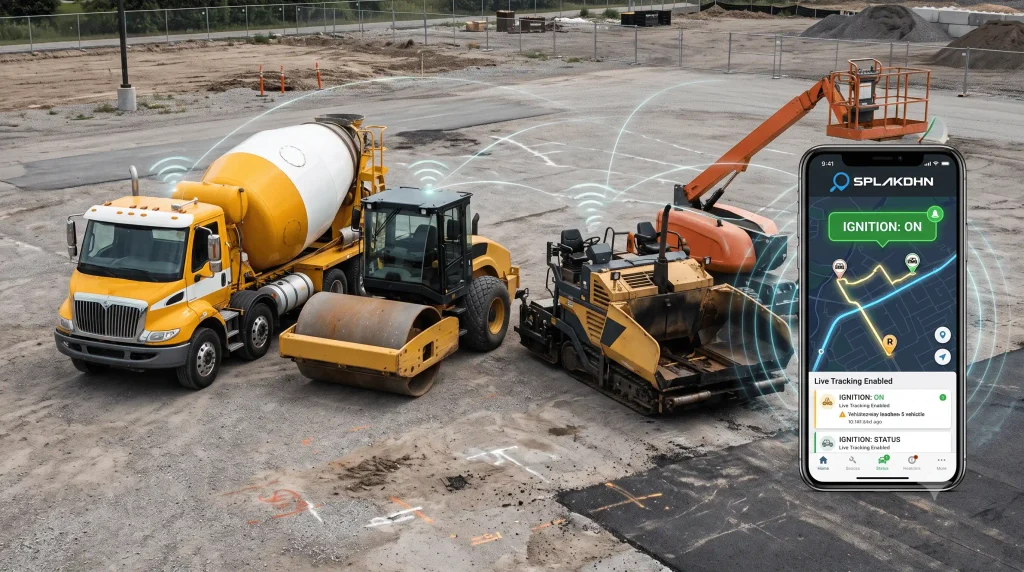
Heavy machinery such as JCBs, excavators, tractors, cranes, dumpers, loaders and road rollers represents a significant investment for construction companies, infrastructure contractors, mining businesses, equipment owners and rental operators. These machines often work across multiple sites, remain outside secure premises for long periods and may be operated by different drivers or operators.
A GPS tracker for heavy machinery can help owners know where equipment is located, review movement history, monitor operating activity and improve control over valuable assets.
For most construction and industrial machinery, a wired GPS tracker is the preferred option because it can be permanently connected to the machine’s electrical system. Unlike a small personal or battery-powered GPS tracker, a wired tracker is designed for continuous vehicle or equipment tracking and does not require frequent battery charging.
At SPLAKDHN, GPS tracking solutions can be used for different types of commercial vehicles, construction equipment, agricultural machinery and industrial assets.
This guide explains the suitable GPS tracker type for common heavy machinery and how GPS tracking can be used for each machine.
Why Use a GPS Tracker on Heavy Machinery?
Heavy equipment can move between construction sites, warehouses, farms, mining areas and project locations. Traditional methods such as phone calls, registers or manual reporting may not provide a reliable real-time picture of where equipment is actually being used.
A wired GPS tracker can provide location information through a GPS/GNSS positioning system and transmit the information through a cellular network to a tracking platform or mobile application.
Depending on the GPS device and software plan, useful information may include:
- Current or last known location
- Vehicle or machine movement
- Route history
- Parking or stoppage locations
- Ignition status
- Movement duration
- Speed information where applicable
- Geofencing alerts
- Unauthorised movement alerts
- Historical trip information
- Device connectivity status
The exact features depend on the GPS model, installation method, network availability and software platform.
For heavy machinery, the most important advantage is often asset visibility and operational control, rather than simply knowing the machine’s location.
Wired GPS Tracker for Construction & Heavy Machinery
A wired GPS tracker is connected to the machine’s electrical system by an installer. Once installed correctly, the tracker can remain fitted to the equipment and operate whenever the required power supply is available.
This makes wired GPS tracking particularly suitable for machines that are:
- Expensive
- Used regularly
- Operated for long working hours
- Frequently moved between project sites
- Difficult or inconvenient to recharge
- Owned by construction or rental businesses
- Used by multiple operators
A wired tracker can also be installed discreetly inside suitable parts of the machine, subject to safe installation and manufacturer recommendations.
Wired vs Battery GPS Tracker for Machinery
Battery-powered trackers can be useful when an electrical connection is unavailable or when temporary tracking is required. However, heavy machinery generally has its own electrical system, making a wired solution more practical for permanent monitoring.
A wired tracker does not mean that every electrical or engine parameter is automatically available. The information that can be monitored depends on the particular tracker, machine wiring and available inputs.
For most permanently operated JCBs, excavators, tractors, loaders, dumpers and similar equipment, a professionally installed wired GPS tracker is generally the more suitable choice.
GPS Tracker Uses by Machinery Type
JCB / Backhoe – Wired GPS Tracker
A JCB or backhoe loader can move between construction projects and may be used by different operators. Because the machine is often hired or deployed at different locations, knowing its current location and movement history can be valuable.
A wired GPS tracker for JCB/backhoe can help with:
- Location tracking
- Construction-site movement monitoring
- Unauthorised movement alerts
- Route history
- Equipment utilisation monitoring
- Rental equipment management
- Theft-risk reduction
- Geofence-based monitoring
For JCB rental businesses, GPS tracking can also provide an additional layer of control when equipment is deployed at customer locations.
Recommended GPS type: Wired GPS tracker
A permanent wired installation is generally preferable for a JCB because the machine has its own electrical system and is usually operated as a long-term asset.
Excavator – Wired GPS Tracker
Excavators are high-value construction machines commonly deployed at road, building, mining, excavation and infrastructure projects.
An excavator GPS tracker can help owners monitor where the equipment is located and whether it has moved outside an authorised area.
Typical uses include:
- Excavator location tracking
- Site-to-site movement history
- Geofencing
- Unauthorised movement alerts
- Fleet management
- Rental equipment monitoring
- Asset recovery assistance
- Utilisation review
For contractors operating several excavators across different sites, centralised GPS tracking can make asset management easier.
Recommended GPS type: Wired GPS tracker
Tractor – Wired GPS Tracker
Tractors are used in agriculture, landscaping, road work, transportation and other commercial applications. A tractor may spend considerable time away from the owner’s premises.
A wired GPS tracker for tractors can help monitor:
- Tractor location
- Movement history
- Field or worksite visits
- Unauthorised movement
- Operating routes
- Geofence entry and exit
- Fleet activity
For businesses with multiple tractors, GPS tracking can help create a clearer record of where individual machines are being used.
Recommended GPS type: Wired GPS tracker
For agricultural operations, the final tracker choice should consider the tractor’s electrical system, environmental conditions and installation location.
Road Roller – Wired GPS Tracker
Road rollers are commonly deployed on road construction and infrastructure projects. They may remain at temporary worksites and can be moved between projects.
A GPS tracker for road rollers can provide useful location and movement visibility.
Possible applications include:
- Equipment location tracking
- Project-site monitoring
- Unauthorised movement alerts
- Movement history
- Fleet management
- Rental equipment monitoring
Recommended GPS type: Wired GPS tracker
Because a road roller is normally a permanent commercial asset, a wired tracker is generally more convenient than a frequently recharged battery tracker.
Loader – Wired GPS Tracker
Wheel loaders and other loaders are widely used in construction, mining, material handling and industrial operations.
A wired GPS tracker for loaders can help businesses monitor equipment deployed across multiple locations.
Useful applications include:
- Current/last known location
- Route history
- Geofence monitoring
- Unauthorised movement detection
- Asset management
- Rental fleet monitoring
- Equipment utilisation review
Recommended GPS type: Wired GPS tracker
For larger loader fleets, GPS tracking can be combined with fleet records to maintain a better overview of equipment deployment.
Crane / Hydra – Wired GPS Tracker
Cranes and Hydra-type mobile lifting equipment are valuable commercial assets and may frequently move between construction sites.
A GPS tracker for cranes and Hydra equipment can help businesses maintain visibility of their mobile assets.
Potential uses include:
- Crane location tracking
- Movement history
- Geofence alerts
- Unauthorised movement monitoring
- Fleet management
- Rental equipment tracking
- Site deployment records
Recommended GPS type: Wired GPS tracker
Because cranes can have complex electrical systems, installation should be performed carefully by a qualified technician without interfering with critical safety systems.
Dumper / Tipper – Wired GPS Tracker
Dumpers and tipper vehicles are commonly used in construction, mining, roadwork and material transportation.
A wired GPS tracker for dumpers and tippers can help operators monitor vehicle movement between loading areas, project sites and unloading locations.
Common applications include:
- Location tracking
- Route history
- Trip monitoring
- Geofencing
- Unauthorised movement alerts
- Fleet monitoring
- Vehicle utilisation management
For businesses operating several dumpers, GPS tracking can provide a central view of the fleet.
Recommended GPS type: Wired GPS tracker
Water Tanker – Wired GPS Tracker
Water tankers are used for construction sites, road maintenance, industrial applications, municipal services and other operations.
A GPS tracker for water tankers can help establish where the tanker has travelled and whether it remains within its assigned operating area.
Useful applications include:
- Tanker location monitoring
- Route history
- Site visit verification
- Geofence alerts
- Unauthorised movement alerts
- Fleet management
Recommended GPS type: Wired GPS tracker
For water tankers, installation should be selected carefully to protect the tracker from excessive water, heat, vibration and physical damage.
Concrete Mixer – Wired GPS Tracker
Concrete mixer vehicles and equipment often travel between batching plants, construction sites and other locations. Timing and route visibility can be important for construction operations.
A GPS tracker for concrete mixers can help businesses monitor:
- Vehicle location
- Movement history
- Site arrival and departure
- Route activity
- Geofences
- Unauthorised use
- Fleet deployment
Recommended GPS type: Wired GPS tracker
For mixer fleets, GPS tracking can complement dispatch and operational systems by providing an independent location record.
Paver – Wired GPS Tracker
Pavers are specialised road-construction machines used at project sites for laying asphalt and other paving materials.
Because pavers are expensive and often deployed at temporary infrastructure projects, tracking their location can be useful for contractors.
A wired GPS tracker for pavers can support:
- Equipment location monitoring
- Project-site tracking
- Movement history
- Unauthorised movement alerts
- Fleet management
- Equipment deployment records
Recommended GPS type: Wired GPS tracker
Forklift – Wired GPS Tracker
Forklifts are commonly used in warehouses, factories, logistics facilities, manufacturing plants and industrial sites.
A GPS tracker for forklifts can be useful where forklifts operate across large outdoor areas or between multiple facilities.
Possible uses include:
- Asset location
- Movement monitoring
- Unauthorised movement alerts
- Fleet management
- Equipment utilisation
- Geofencing
For indoor-only forklifts, GPS performance can be affected by building structures and limited satellite visibility. Businesses should therefore confirm that the proposed tracking solution is suitable for their environment.
Recommended GPS type: Wired GPS tracker
Boom Lift / Scissor Lift – Wired GPS Tracker
Boom lifts and scissor lifts are commonly used for work at height in construction, maintenance, warehouses and industrial projects.
These machines are often rented or moved between different work locations.
A GPS tracker for boom lifts and scissor lifts can help equipment owners monitor:
- Machine location
- Movement history
- Rental equipment deployment
- Unauthorised movement
- Geofence activity
- Fleet status
Recommended GPS type: Wired GPS tracker
For rental businesses, GPS tracking can be particularly useful because the equipment may be operated at customer-controlled sites.
Drilling Machines – Wired GPS Tracker
Drilling machines can be used in construction, infrastructure, mining, foundation work, borewell operations and other specialised applications.
Because these machines can be expensive and deployed at remote project sites, location visibility can be valuable.
A GPS tracker for drilling machines can support:
- Equipment location tracking
- Site deployment monitoring
- Movement history
- Unauthorised movement alerts
- Fleet management
- Geofence monitoring
Recommended GPS type: Wired GPS tracker
The installation location should be selected carefully because drilling equipment can experience vibration, dust, moisture and harsh operating conditions.
Bulldozer – Wired GPS Tracker
Bulldozers are widely used in construction, mining, earthmoving and infrastructure projects.
A GPS tracker for bulldozers can help owners monitor expensive equipment operating away from the main office or yard.
Potential applications include:
- Bulldozer location tracking
- Project-site monitoring
- Movement history
- Unauthorised movement alerts
- Geofencing
- Fleet management
- Rental equipment monitoring
Recommended GPS type: Wired GPS tracker
What Can a GPS Tracker Help a Machinery Owner Control?
A GPS tracker does more than display a machine on a map. When combined with suitable software, it can become an asset-management tool.
Location Visibility
Owners can check the current or last available location of machinery instead of depending entirely on phone calls from operators.
Movement History
Historical routes can help businesses understand where equipment has travelled during a selected period.
Geofencing
A virtual boundary can be created around a yard, construction site, project area or authorised operating zone. Alerts can then be configured when equipment enters or leaves the defined area, depending on the tracking platform.
Unauthorised Movement Alerts
If equipment moves unexpectedly, a GPS system can provide an alert through supported software or communication channels.
Rental Equipment Management
Construction machinery is frequently rented or hired. GPS tracking can give equipment owners better visibility after the machine leaves their premises.
Fleet Management
Companies operating JCBs, excavators, loaders, dumpers and other machines can use GPS tracking to maintain a centralised view of multiple assets.
Better Asset Records
Location and movement information can supplement manual fleet records and help businesses understand equipment deployment.
Why Wired GPS Is Usually Better for Heavy Machinery
There is no single GPS tracker that is perfect for every asset. The correct choice depends on the machine, power availability, installation requirements, network coverage and intended use.
For permanently operated heavy machinery, however, wired GPS has several practical advantages.
Continuous power: The tracker can receive power from the machine’s electrical system.
Permanent installation: Once properly installed, the owner does not normally need to remove the device for regular charging.
Suitable for commercial fleets: Wired tracking is practical when the same machine is used continuously over months or years.
Discreet installation: A qualified installer can select an appropriate installation location within the machine.
Operational monitoring: Wired trackers can be better suited to machines where regular movement and long-term monitoring are required.
A battery-powered tracker may still be preferable for temporary assets, equipment without a suitable electrical connection, or situations where a non-wired installation is specifically required.
How to Choose a GPS Tracker for JCB, Excavator or Other Machinery
Before purchasing a tracker, consider the following:
Power Supply
Confirm the machine’s electrical system and the tracker’s supported voltage before installation.
Mobile Network
The tracker generally requires cellular connectivity to transmit information to the tracking platform. Network coverage at remote construction or mining sites should be considered.
Tracking Platform
Check whether the GPS solution provides a web dashboard, mobile application, historical reports, alerts and other features required by your business.
Installation
Heavy machinery operates in demanding environments. Installation should avoid critical mechanical, hydraulic and safety components.
Environmental Conditions
Dust, heat, water, vibration and mechanical impact should be considered when selecting and installing a GPS device.
Software & Renewal
GPS tracking is normally a combination of hardware and software/network services. Confirm the applicable annual software or service charges before purchasing.
Advanced Telematics: Integrating Fuel Sensors & Remote Engine Relays
Basic GPS tracking shows you where your machinery is on a map. However, for high-value construction equipment operating in demanding Indian environments, maximizing asset security and stopping revenue leaks requires hardware-level sensor integration.
[Wired GPS Unit]
   ├── High-Precision Digital Fuel Rod ──> Real-Time Fuel Theft / Drain Alerts
   └── Remote Immobilization Relay     ──> Instant Engine Lockout via App
When deploying our wired GPS solutions for heavy fleets, we typically recommend integrating two critical components directly into the machine’s electrical system:
1. Capacitive Fuel Level Sensors (Anti-Theft Monitoring)
Fuel siphoning is a massive, hidden operational cost for dumpers, excavators, and JCBs left at unsecure project sites overnight.
- The Technology: We bypass unreliable factory fuel gauges by installing high-precision, digital capacitive fuel rods directly into the machine’s tank.
- The AI Data Edge: The sensor continuously cross-references engine ignition data with fuel level drops. If the fuel level drops sharply while the engine ignition is OFF, the system flags an immediate fuel theft alert via SMS and the tracking dashboard, detailing the exact location and liter deficit.
2. Remote Engine Immobilization Relays
Managing unauthorized after-hours usage or recovering an asset from a defaulted rental client requires digital control over the starter circuit.
- The Technology: A specialized 12V/24V heavy-duty relay is wired inline with the machine’s ignition switch or fuel pump feed line.
- Safety Protocol: Operators can trigger a remote engine lockout command directly from their mobile app. For safety compliance, the tracking platform processes the request but delays the actual engine shutdown until the GPS sensor detects that the machine’s speed has reached exactly 0 km/h and the engine is idling, preventing abrupt cut-offs while a machine is actively working or moving.

Corporate Fleet GPS Tracking Solutions
SPLAKDHN provides advanced GPS tracking solutions for corporate fleets and construction equipment, including concrete mixers, road rollers, asphalt pavers, boom lifts, scissor lifts, forklifts, cranes, JCBs and other heavy machinery. Our mobile GPS tracking systems help construction companies, infrastructure contractors, equipment rental businesses and project managers monitor real-time vehicle locations, track movement history and improve fleet visibility. Whether you manage a few machines or a large fleet across multiple project sites, our GPS trackers help improve equipment utilization, operational efficiency and asset security.
GPS Tracker Dealership & Bulk Purchase Enquiries
Are you looking for a reliable GPS tracker supplier for construction machinery, corporate fleets or dealership business in India? SPLAKDHN welcomes enquiries from GPS tracking dealers, distributors, resellers, system integrators and corporate buyers seeking bulk GPS tracking devices for concrete mixers, road rollers, pavers, boom lifts and other commercial equipment. Contact our team for dealership opportunities, bulk order pricing and suitable wired GPS tracking solutions for heavy machinery and commercial fleets. Partner with SPLAKDHN to explore GPS tracking products for your customers and business requirements across India.
Frequently Asked Questions About GPS Trackers for Heavy Machinery
Which GPS tracker is best for a JCB?
For a permanently operated JCB, a wired GPS tracker is generally a practical choice because it can be connected to the machine’s electrical system and used for long-term location monitoring.
Can a GPS tracker be installed on an excavator?
Yes. A suitable wired GPS tracker can generally be installed on an excavator, provided the device’s electrical and environmental specifications are compatible with the machine.
Can GPS track a tractor?
Yes. A GPS tracker can provide location and movement information for a tractor when the tracker has suitable power and cellular connectivity.
Is a battery GPS tracker better than a wired tracker for machinery?
For permanent heavy machinery, a wired tracker is usually more convenient because it does not require regular manual charging. Battery trackers can be useful for temporary or special applications.
Can GPS tracking prevent machinery theft?
A GPS tracker cannot physically prevent theft. However, location monitoring and unauthorised movement alerts can help an owner identify unexpected movement and assist with asset recovery.
Can one GPS platform track different types of machines?
Yes, a suitable fleet-tracking platform can potentially manage different assets such as JCBs, excavators, tractors, loaders, dumpers and other machinery, provided the selected GPS devices are compatible with the platform.
Does GPS tracking show exactly what a machine is doing?
Not necessarily. Basic GPS tracking primarily provides location and movement information. Additional information such as ignition, engine parameters or other machine data requires compatible hardware, wiring, sensors or vehicle interfaces.
Conclusion
GPS tracking has become a practical asset-management tool for businesses operating construction equipment, agricultural machinery, industrial equipment and rental fleets.
For JCBs, excavators, tractors, road rollers, loaders, cranes, Hydras, dumpers, tippers, water tankers, concrete mixers, pavers, forklifts, boom lifts, scissor lifts, drilling machines and bulldozers, a wired GPS tracker is generally the most suitable starting point for permanent tracking.
The biggest benefit is not simply seeing a machine on a map. Proper GPS tracking can give an owner better visibility of where equipment is located, how it moves, whether it leaves an authorised area and how multiple assets are deployed across different projects.
For businesses managing expensive machinery or rental equipment, this additional visibility can make day-to-day asset management more organised and responsive.
Before installation, always confirm the tracker’s power requirements, network compatibility, environmental specifications and software features. Professional installation is recommended so that the GPS device does not interfere with critical electrical, hydraulic or safety systems.
Looking for a wired GPS tracker for a JCB, excavator, tractor, dumper, loader or other heavy machinery? Explore suitable GPS tracking solutions for construction, agricultural and commercial equipment and select the device according to your machine and tracking requirements.
*General Telematics Information Disclaimer: The technical configurations, sensor integrations, and relay installation workflows described above are intended solely for general educational and informational purposes. Heavy machinery electrical architectures vary significantly by manufacturer, year, and model. Unauthorized or improper installation of electrical bypass relays can void manufacturer warranties, damage engine control units (ECUs), or interfere with critical hydraulic safety systems. Always consult a certified auto-electrical technician or a authorized SPLAKDHN deployment engineer, and verify your equipment’s physical wiring schema before attempting hardware modifications.